Well-run corporate events have a certain ease about them. Transitions feel natural, the room stays engaged, and nothing seems rushed or forced. While those outcomes depend on many decisions, entertainment is often one of the factors that determines whether an event holds its rhythm or loses it.
People may not remember the exact wording of a keynote or the sequence of agenda items, but they will remember whether the room felt flat, whether the energy lifted at the right moment, or whether the evening dragged when it should have moved. Entertainment plays a role in all of that, whether it’s centre stage or barely noticed.
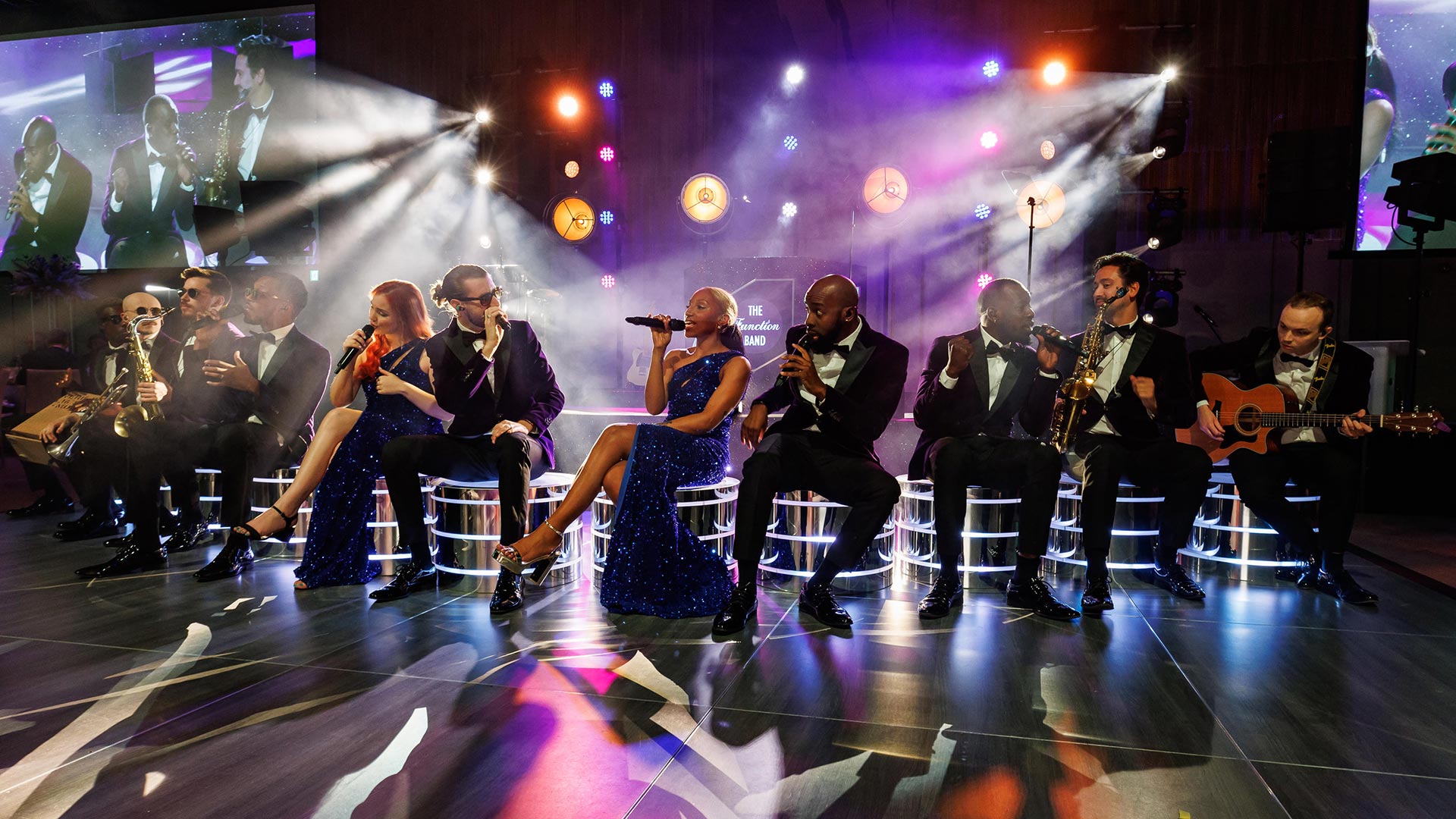
When it’s approached thoughtfully, booking entertainment becomes part of planning the event as a whole rather than a separate task to tick off near the end. That’s the mindset bands like The Function Band bring to corporate events, working around the flow of the evening rather than trying to dictate it.
Planning corporate events with entertainment in mind
From the outside, corporate event planning can appear to be a series of separate components: venue, catering, speakers, entertainment. In practice, those elements are rarely distinct. They influence one another at almost every stage.
Entertainment touches timing, sound levels, room layout, lighting, even how confident speakers feel stepping on stage. A band or performer might only be “on” for a couple of hours, but their presence shapes the atmosphere well beyond that window.
For most experienced planners, entertainment is considered part of the wider event production plan, therefore not something to be added as an afterthought. When staging, timing and room layout are clear, choosing the right entertainment becomes a far more straightforward decision.
Entertainment that suits the room, not the trend
One of the trickier parts of corporate event planning is judging tone.
What works brilliantly for a client celebration can feel misplaced at a leadership dinner. What energises a sales team might exhaust a group that’s already sat through a full conference day.
Corporate-focused bands like The Function Band are often booked precisely because they understand this balance well. Not every moment needs to be big. Sometimes the best decision is knowing when not to push.
When the right format isn’t immediately obvious, examples of entertainment approaches used at luxury corporate events can help narrow the options without forcing a particular direction.
Booking corporate entertainment in real life
While booking entertainment rarely follows a neat checklist from day one, it can help to have a grasp of the basics.
Most planners start with a few concrete details: the date, the city, the venue. From there, conversations tend to be exploratory. What’s possible? What’s realistic? What will actually fit once timings are locked?
At the outset, discussions are generally framed around the wider context of the event, including:
- When guests arrive and how the room should feel at that moment
- Where speeches, awards or announcements sit
- How long guests are likely to stay once formal elements finish
- What technical infrastructure already exists at the venue
- When those points are clear, the rest tends to fall into place more naturally.
Your checklist for a smooth event
As plans firm up, details have a habit of scattering across emails, calls and shared documents. Pulling them back together before confirming entertainment can save a lot of last-minute stress.
A practical checklist usually covers:
☐ Confirmed performance timings
☐ Space requirements within the room
☐ Setup and soundcheck windows
☐ Power, sound limits and technical needs
☐ Who is coordinating with the venue and production teams
☐ On-the-day contacts and cue management
This kind of sense-check fits neatly into any broader “how to plan a corporate event” checklist, and helps ensure entertainment isn’t treated as a separate moving part.
Where bookings go wrong
When entertainment causes issues at corporate events, it’s often due to minor timing or coordination gaps, such as moments that feel rushed, music introduced before the room has settled, or technical decisions that are made later than ideal.
Another common issue is assuming entertainment will automatically “lift” the event. It can, but only if it’s introduced at the right moment and at the right level.
Good corporate event planning is often about sequencing rather than spectacle.
Bringing it back to the bigger picture
If you’re asking what corporate event planning is really about, the answer usually comes down to judgement.
Knowing what to prioritise. Knowing when to hold back. Knowing how different decisions affect one another.
Entertainment is part of that equation. When it’s chosen with intention and placed carefully within the event, it supports everything else you’ve worked to build.
When the pacing and atmosphere are handled carefully, what stays with guests is the sense of the event as a whole rather than any single performance. If that’s the outcome you’re aiming for, speaking with The Function Band about how entertainment fits into your wider plans can help shape those decisions early.